
A bill in the NC General Assembly would create a housing boom, giving more rights to property owners and builders. But would it lower costs?
If there is one issue that Republicans and Democrats can agree on is that housing costs are out of control in North Carolina cities. Housing affordability, for both renters and homeowners, has far surpassed median incomes, with 28% of North Carolinian renters/homeowners being cost-burdened. In New Hanover alone, it’s 34% of households.
This spike in housing costs is partly due to the COVID-era bottleneck and supply chain shortage. Less supply, coupled with expensive materials, created the perfect storm that we face today. By 2029, NC will face a supply gap of 765,000 units.
Builders, ready to meet the demand, often face roadblocks with planning and zoning ordinances, local government officials resistant to growth, and NIMBY neighbors who fight new projects.
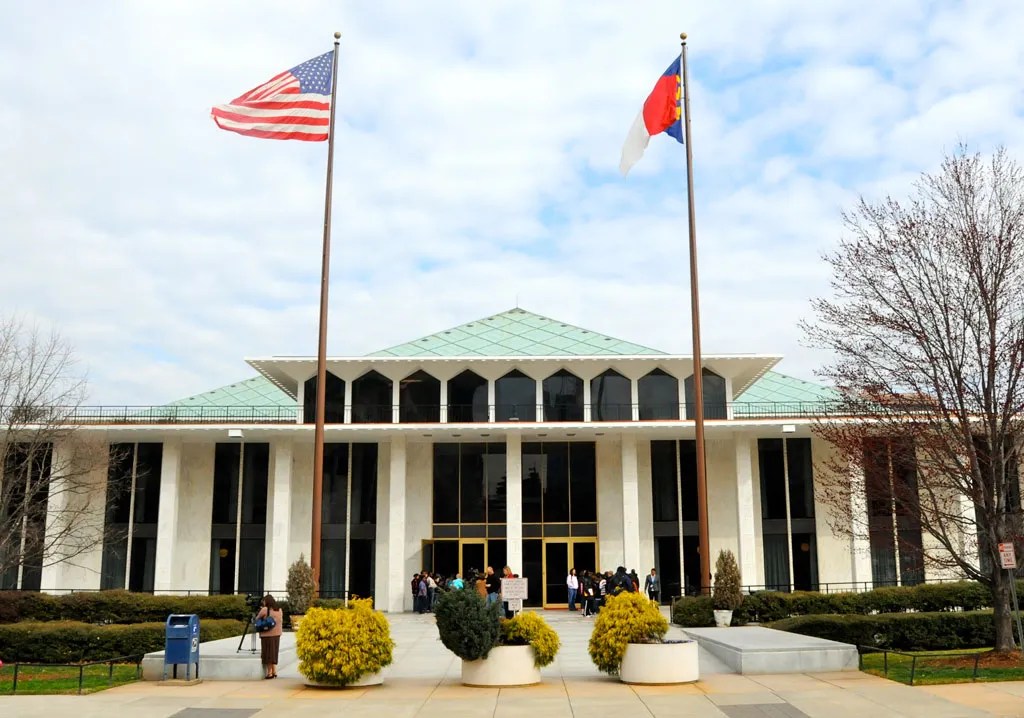
So what’s the solution? A bill written by home builders, for home builders. House Bill 765, known as the “Save the American Dream Act,” sponsored by Forsyth area home builder Representative Jeff Zenger, seeks to give more power to home builders and property owners, while stripping a lot of planning and zoning authority away from local elected and appointed governing boards. Supporters of the bill cite that the proposed changes to the General Statutes would increase housing supply and lower costs for homeowners and renters.
As a 34-year-old professional currently priced out of the home ownership market, I understand the affordability struggles many people face living in a North Carolina city like Wilmington. I chose to live in the city limits because I didn’t want a long commute from Brunswick or Pender County. I love being near everything. While I don’t expect to find a sprawling single-family home with a big backyard like I could find in a suburban or rural area, there should be availability of condos, townhomes, or even smaller single-family homes. But in Wilmington, middle market housing availability is limited, and you’re paying well over market as a homebuyer or renter.
A teacher or a first responder making $50,000 a year should be able to find a rental for under 30% of their income, or about $1,250 a month. Yet, it’s almost impossible to even find a one-bedroom studio in Wilmington that’s within budget. Residents and elected leaders have favored less dense, single-family neighborhoods over dense single-family, multi-family, or mixed-use development within many of our cities, including Wilmington. That point of view is not sustainable in our small, landlocked city if we want to have a vibrant place where people of all ages and income levels can live and work. Contrary to popular belief, increasing the housing supply in our cities will bring costs down. It’s basic economics.
While HB 765 largely focuses on residential development, the bill would make it easier for larger cities of 125,000 population or more, including Raleigh, Charlotte, Greensboro, Durham, Winston-Salem, Fayetteville, Cary, and Wilmington (although Wilmington is just over the 123,000 mark), to build tiny homes (600 square feet) and one additional accessory dwelling unit (ADU).
The bill would do away with requirements to build a certain number of parking spaces. This means that cities like Wilmington can become more dense and allow for more walkable communities, alleviating traffic congestion. Builders would also have more latitude with residential building design, sidewalks, plant borders, and a housing development’s interior or driveways.
Additionally, the bill scales back a controversial law passed last year to limit down-zoning. Down-zoning is the rezoning of land, typically over the objection of the landowner, to a less intensive use. This type of zoning usually decreases the worth of the land. This bill allows the building by right of at least four homes per acre in residential zones statewide. This type of permitted use is important in cities to allow for more properties to be constructed. However, I do not think this should apply to rural counties with populations under 50,000.
As someone who has previously served as a planning board member and now as a board of adjustment member, I understand the objections to HB 765. Currently, if a builder or property owner wants to appeal a rezoning or variance decision, they can do so in district court. Any liability falls on the municipal or county government and not individual officials. However, this bill would allow builders, property owners, or related organizations to sue individual lawmakers and board appointees directly for civil damages from a decision.
It also bars an official from voting on any land use decision where there is a conflict of interest or even a preconceived bias towards the decision. A member would also have to abstain from voting if any ex-parte information is obtained outside of the initial application for consideration. Opponents to this bill question if this is even legal to enforce.
These provisions put enormous pressure on elected and appointed officials. The General Statues already state that an official should recuse themselves from any vote if they have a direct conflict of interest or seek to profit off of an application. Additionally, people assume that planning board or board of adjustment members can make decisions based on their personal opinion. That’s not our job.
Our job is to follow what’s in the land use plan and operate within the existing ordinances. We have a strict criterion that we use to make decisions, and we must document why those decisions were made. Serving on county and municipal boards is a rewarding opportunity to serve our communities, and this bill would deter people from wanting to serve, especially if they have to fear being sued for their decision.
Another provision that would complicate permitting is around water and sewer. First, when determining planning jurisdiction for the application, the municipal or county government that provides water and sewer, by default, gets jurisdiction over the zoned property. A builder or developer can elect to provide their own water system; however, if the builder requests water access, then the municipal or county government must provide those services. This would increase costs to utility ratepayers and strain our public utilities even more.
Ultimately, as a free-market conservative, I believe that the solution to our housing crisis isn’t more government intervention; it’s less. Many NC municipalities have passed resolutions decrying this Bill, because of some of the provisions that I mentioned above, and because it limits local government’s authority around development. But is that a bad thing? As this bill makes its way through the General Assembly, we will see if it gains enough support in the House and Senate. While it’s a long way from becoming law, I hope that municipalities and counties will see this as a wake-up call to reform their planning and zoning standards so that we can make North Carolina a desirable and affordable place to live for generations to come.


 Rogue Pilgrim
Leave a comment